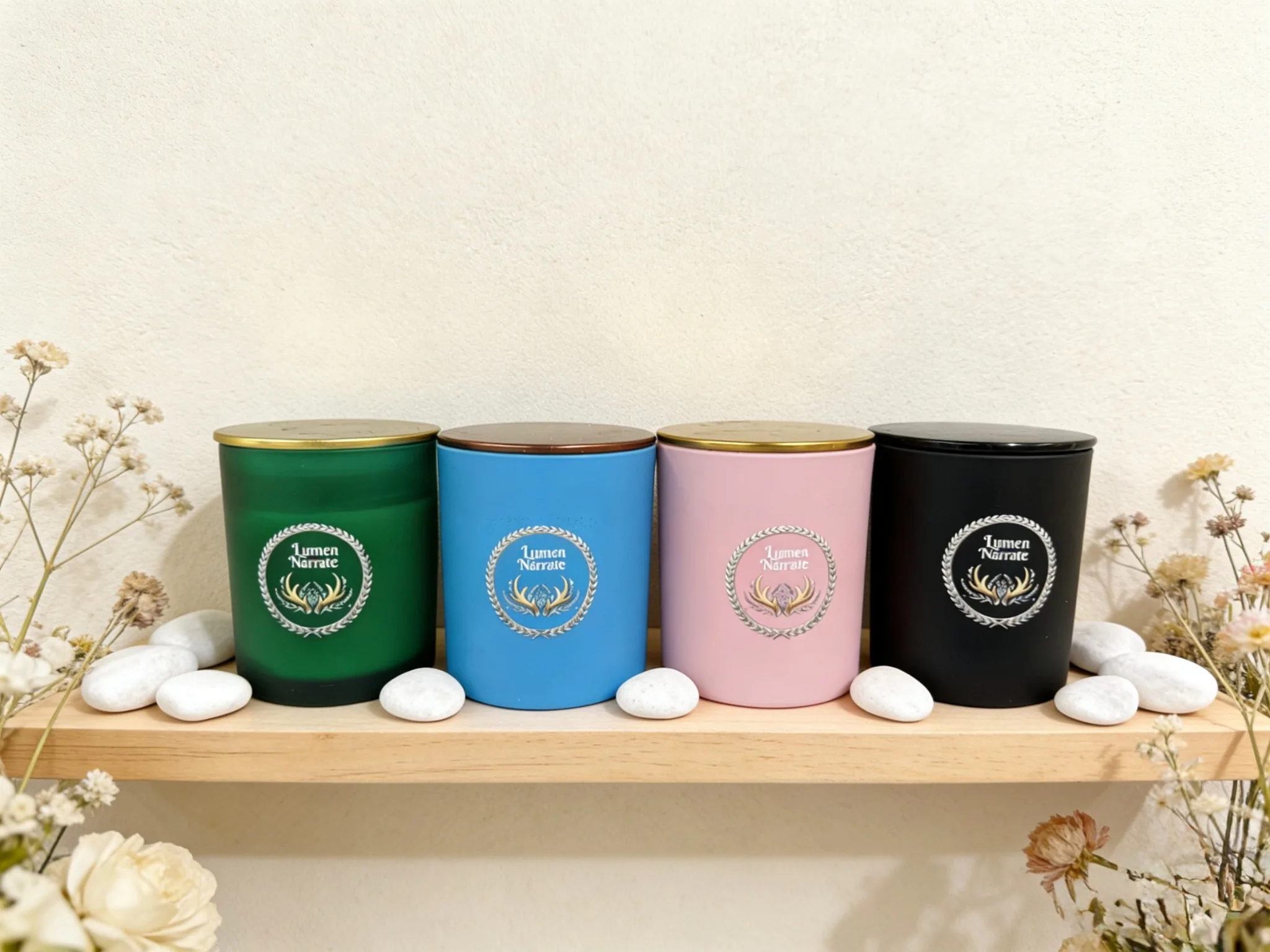
When a buyer asks for a low MOQ, the next question is usually about packaging: “Can I still use my own brand?” In many cases the answer is yes, but the branding method has to match the quantity.
An available candle with a custom label is a small production project. A new glass mold, four fragrances and four printed boxes is several component projects grouped under one order. The total piece count may be the same, but the work and supplier minimums are not.
Low MOQ is a production route, not a factory label
Some current products can be prepared in smaller quantities because the vessel, mold or packaging components already exist. Selected Christmas ready-design products may start from 24 pieces on approved SKUs. Existing-product private label routes can start from 200 pieces when the required components are available.
Those quantities do not automatically apply to a new fragrance formula, custom vessel, new mold or printed gift box. Each new component needs to be checked with the supplier that makes it.
Three details decide whether the order works
How many pieces are in each SKU?
“200 pieces” refers to one finished SKU on the suitable existing-vessel route. Four fragrances normally mean four finished SKUs and 800 candles in total. Send the quantity for every fragrance, vessel color, decoration and packaging version so shared components and separate minimums can be identified correctly.
Which components are already available?
An existing jar, lid and box reduce the number of new minimums. Availability still needs checking for the required color and quantity; a product shown in a catalogue is not proof that every component is in stock today.
How much packaging is truly custom?
A label, sleeve or card can give an available box a clear brand identity. A fully printed box has its own print setup and minimum. If the box minimum exceeds the candle quantity, decide whether to store the extra boxes for a reorder or simplify the first version.
A smaller order should stay focused
The best use of a smaller run is to test one clear product idea. Keep the vessel or candle shape consistent, limit the number of fragrances and use one packaging structure. This gives the buyer useful sales feedback without spreading the order across too many versions.
Low MOQ is less helpful when the required retail price is very low, the packaging is large and heavy, or every SKU needs different components. In those cases, a higher quantity may reduce setup and freight cost per unit—but only if the buyer has the sales plan and storage for it.
Sampling still needs a written standard
A small order is not a reason to skip approval. Record the product size and weight, fragrance code, wax and wick, label artwork, label position and retail box. Confirm the export packing separately, including units per carton, carton dimensions and gross weight.
A straightforward sample is often prepared in about one week after the specification is settled. New components or revisions take longer. Bulk timing is confirmed after the final product, quantity, packaging and production schedule are known.
Check the cost after delivery, not only the unit price
Small quantities can carry a higher freight cost per piece. A large gift box can make this worse. Ask which trade term is quoted and whether freight, destination clearance, duties or taxes and final delivery are included.
Before approving the order, compare the landed cost with the retail price and the margin needed for a reorder. Sometimes removing one packaging finish improves the business more than negotiating a few cents from the candle.
What to send for a low-MOQ review
- product photo or preferred existing candle;
- quantity for each fragrance, color and artwork;
- label, sleeve, box or full packaging requirement;
- destination and required arrival date;
- target unit price or total budget;
- details that are still open.
For the way minimums are counted, read the private label candle MOQ guide. For first-order planning, see a first private label candle order.
Show us how the quantity is divided
Send the product, pieces per SKU and the packaging you want. We will identify which parts can use available components and which parts create a new minimum.